

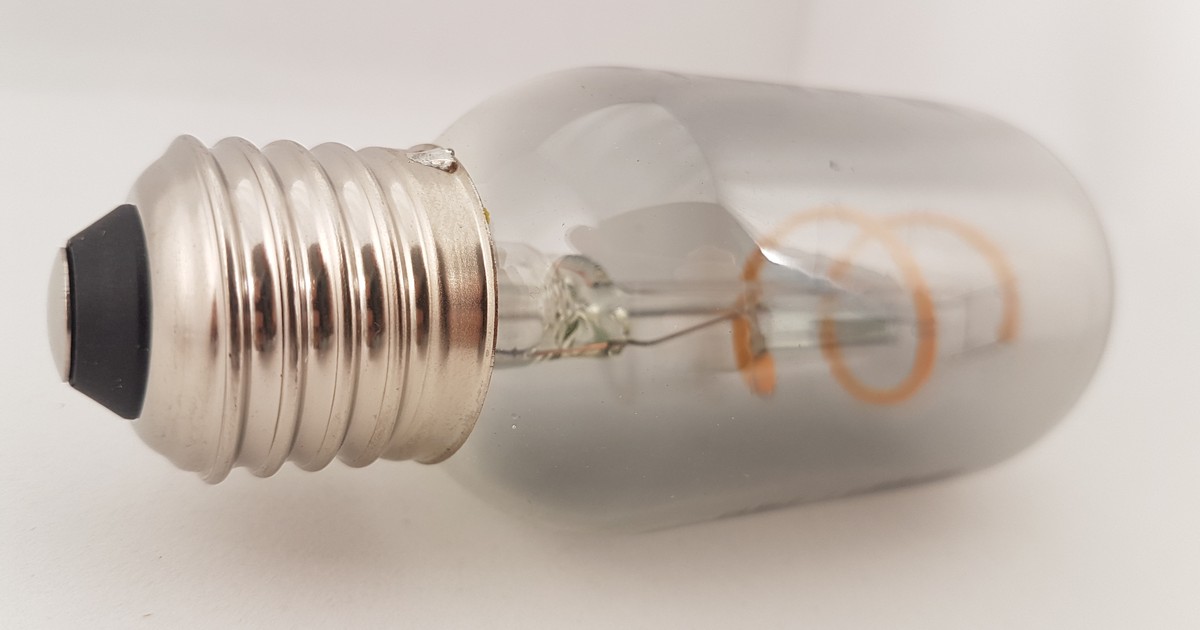
Do you notice that the fitting of your lamp gets warm? A lamp emits heat during use, which can also heat up the fitting and the fixture. How much heat is normal depends on the lamp and the construction. Just feeling it from the outside is not a reliable safety check.
Why does a fitting get warm?
Incandescent and halogen light bulbs release a lot of heat. LED lights generally use less power to provide a comparable light output, but they also generate heat. Especially the housing around the electronics and the lamp base can emit heat.
There is no fixed temperature below which every fitting is safe. The permitted temperatures and conditions depend on the product. Therefore, a general temperature limit for all LED lights does not provide a reliable assessment of your fitting.
An excessively high lamp power
Check the maximum power and the permitted lamp type on the fixture or in the manual. For LEDs, use the actual wattage of the lamp, not the ‘replacing 60 watts’ designation. Also, for low power, the lamp must be suitable for the application.
A lamp that physically fits into the fitting is not necessarily the right choice. Dimensions, power supply voltage and space around the lamp also count. Read also What wattage means for a LED lamp.
Example: 8 watts is not the same as ‘replacing 60 watts’
Suppose a fictitious fixture allows a maximum of 40 watts and you use an LED lamp with the wattage marked as ‘replacing 60 watts’. To compare the wattage limit, you compare 8 with 40 watts. The 60 watts describes the comparison with a traditional lamp and is not the wattage consumed.
The lamp is therefore technically below the power limit, but is not yet automatically suitable. Also check the permitted light source, power supply voltage, dimensions, and suitability for a closed fixture. A 8-watt lamp that according to the manufacturer is not allowed in a closed fixture is not suitable because the fixture specifies a maximum of 40 watts.
If discoloration, flame smoke, or distortion occurs, do not use this calculation as reassurance. Stop using it and have the cause determined. A low lamp wattage does not rule out a bad connection or damaged fitting.
Insufficient heat dissipation
A small, enclosed cap can retain heat. Not every LED lamp can be used in a completely enclosed fixture. To check this, check the product specifications and leave sufficient ventilation space available.
Do not make additional holes in a fixture to solve the problem. Choose a light source that is intended for the existing housing, or have it assessed whether a different fixture is needed. Keep lamps and ventilation openings free of materials that do not belong there.
A bad connection or damaged fitting
Poor electrical contact can cause local extra heat. Discoloration, deformation, a flame or a spark require action. Stop using it and safely turn off the power supply. Have the fitting and connections checked before you use the lamp again.
Do not bend the contact tabs back and do not work on a fitting under tension. Replacing the lamp alone will not repair a damaged holder or connection. A new one lamp fitting must match the electrical and mechanical specifications of the fixture.
What can you control yourself?
- Switch off the lamp, make the fixture voltage-free and let it cool down before touching a replaceable light source.
- Compare the data for the lamp and fixture: actual power, fitting, voltage and permitted use.
- Check without dismantling whether the cap is damaged and whether the ventilation openings are free.
- If there is damage, fire or recurring problems, investigate the cause.
Do you want to switch to LED lamps? Choose a suitable model and read How to replace a LED light bulb. A more energy-efficient lamp can reduce the heat load, but it is not a repair for a defective fixture.