

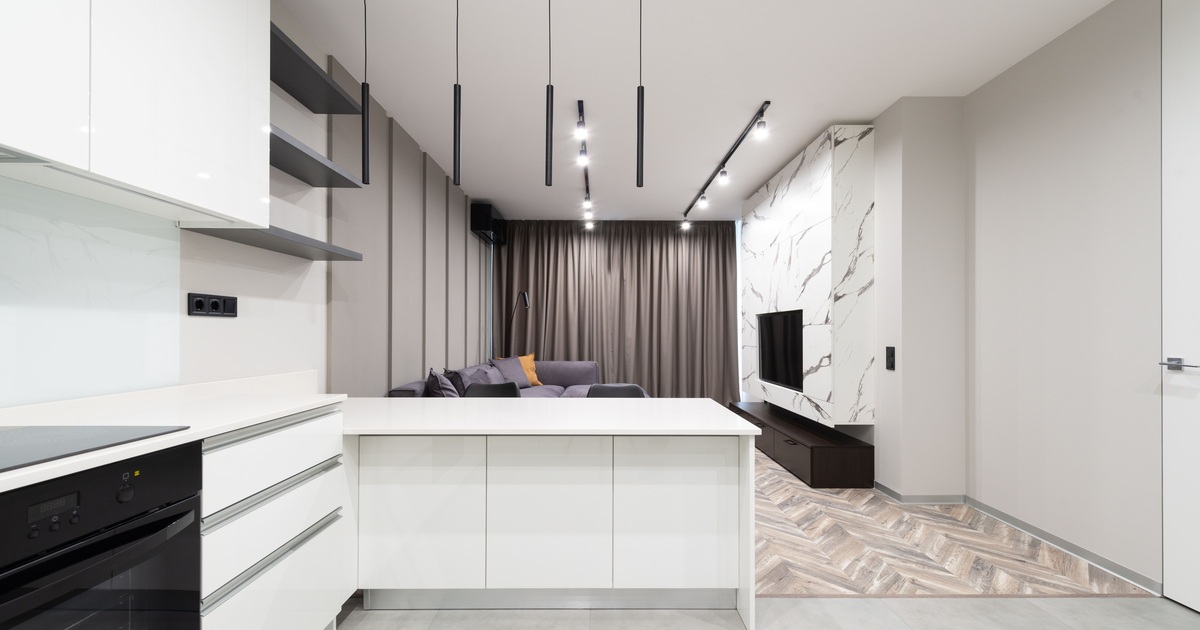
A GU10 railspot combines a suitable rail fixture with a replaceable GU10 bulb. You can replace the light source without immediately having to choose a new fixture. That freedom has its limits: the lamp, housing, adapter, and control must remain compatible as a whole.
What determines the fixture and what determines the lamp?
The fixture determines, among other things, the connection to the rail, the directionality and the amount of space the lamp receives. The GU10 lamp provides the light source with a certain luminous flux, color temperature, beam pattern and dimming capability.
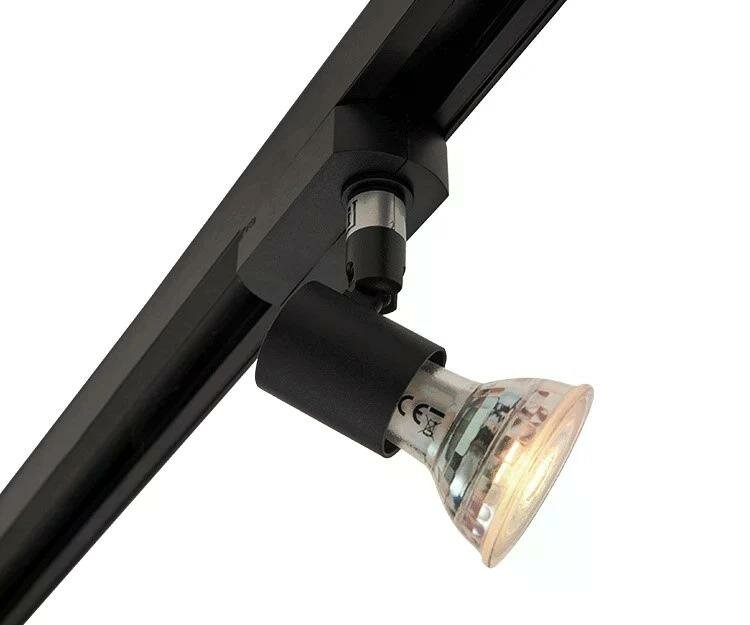
The housing can affect the visibility of the lamp and the final light distribution. Therefore, evaluate the lamp in the chosen fixture. A product photo of only the separate lamp does not tell how disturbing the source is from the sofa or shop floor.
First check the rail system
GU10 describes the lamp socket, not the adapter on the rail. A GU10 spot for one rail system does not automatically fit with another. Check the manufacturer, series, power method and the explicitly supported fixtures and accessories.
Choose between circuits from the desired control panel. A home may need multiple separate groups, and a store may only need one. Read 1-phase or 3-phase rail lighting for that consideration.
Not every GU10 fits into every housing.
Compare the lamp diameter and total length with the available space and the way the lamp is held. A longer lamp may protrude or prevent a ring from closing. Also check the power supply voltage and the maximum allowable power input.
In a closed or heavily sealed housing, the lamp must be suitable for that purpose. Do not just choose a rating like ‘replaces 50 watts’: that is not the actual wattage output. For the basic information, see Recognizing lamp base, voltage and size.
Example: A cabinet becomes a product display
Suppose two railspots are first used to illuminate a wide cabinet and later to highlight a smaller product display. Test whether moving them along the rail achieves the desired effect. View the result from the spot where someone is reviewing the product.
If the bundle falls too close to the display, compare it with a suitable lamp with a different light distribution. Adding more lumens by itself will not automatically make the difference between the display and the background stand out more. Also check that the surrounding lighting doesn't make the difference between the display and the background stand out too much.
Evaluate colors and reflections with the actual product. A shiny packaging can reflect back glare that is annoying. When the result is good, record the chosen lamp code and spot direction so that you have the same starting points when replacing it.
What does interchangeability bring?
You can choose a different lamp within the fixture specifications when the task changes. This can be practical during maintenance or when you want a different desired light color. It doesn’t mean that every new lamp has the same performance or works with the same dimmer.
Check how accessible the lamp is according to the manual. Safely un-load the power supply and allow the lamp to cool down before a permitted user replacement takes place. Moving or removing rail adapters must also be done according to the system instructions.
When do you compare integrated rail spots?
An integrated design can offer a different light output, shielding, or control option. Therefore, GU10 is not automatically the best choice for every distance or presentation. Compare both solutions in terms of illumination and maintenance options.
When buying integrated models, ask which modules or drivers are replaceable. With GU10, you need to check whether suitable lamps are available within the required dimensions and performance specifications. The product specifications provide more information than just the technical name.
Dimming and adjusting the light color
Use an appropriate dimmable lamp and control for dimming. Test the entire group, even at the lowest desired setting. Read Assemble dimmable rail lighting for the additional checks.
Compare GU10 rail luminaires together with an appropriate light source. Use The GU10 choice tool to compare the bundle, light color, and performance before ordering the entire setup.